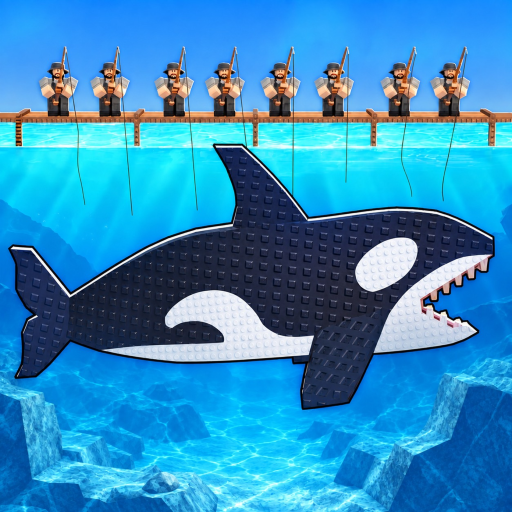
Roll a Fisherman: How To Catch Fish
A complete catch cycle that begins generating cash. In Roll a Fisherman, roll or obtain a fisherman, place that fisherman on the dock, collect the catch, and.
This roll a fisherman how to catch fish focuses on the decision you can control: roll or obtain a fisherman, place that fisherman on the dock, collect the catch, and move it onto a stand. In Roll a Fisherman, a useful choice should move the roll, dock, catch, stand, cash, or upgrade loop forward; the main checkpoint here is a fish leaves the dock flow and appears on the intended stand. Aim for a complete catch cycle that begins generating cash, not an impressive-looking action with no follow-through.
The video below is useful for recognizing the current game and its interface context around how to catch fish. Treat any menu position as a visual cue, then follow the wording shown in the live experience.
Follow one catch from fisherman to stand
Write the goal down in plain language before using resources: a complete catch cycle that begins generating cash. That goal is narrow enough to test and broad enough to stay useful after a normal interface update. The practical priority is to roll or obtain a fisherman, place that fisherman on the dock, collect the catch, and move it onto a stand. If the next link in the fishing loop does not receive anything useful, pause there instead of repeating the most exciting-looking action.
A strong baseline uses the setup that already works. Note the relevant fisherman, dock placement, caught fish, stand assignment, or currency state. Then choose the smallest change connected to this page. You are not trying to prove that one choice is permanently best; you are trying to learn which choice solves the current obstacle without creating a new one elsewhere.
- Name the blocked step before acting.
- Keep unrelated fishermen, stands, and spending unchanged.
- Decide what visible result would count as improvement.
- Save enough resources to reverse course or test again.
Observe the handoff after the action
| Stage | Player action | Result check |
|---|---|---|
| Set a baseline | Record the current how to catch fish state before changing it. | You can describe the starting condition clearly. |
| Make one change | Use the smallest action that directly tests this how to catch fish decision. | Observe a fish leaves the dock flow and appears on the intended stand. |
| Decide | Repeat under similar conditions or restore the prior setup. | Keep the change only when the useful result repeats. |
The action column and the result column are deliberately separate. A roll, purchase, placement, catch, claim, or upgrade can complete correctly without improving the goal you selected. Check a fish leaves the dock flow and appears on the intended stand. If that signal changes in the intended direction and repeats under similar conditions, keep the change. If it does not change, the useful conclusion is that this was not the active bottleneck.
Use the official Roblox experience as the authority for labels and requirements that can change. Exact prices, rates, limits, and eligibility conditions should come from the interface currently attached to the action, not from memory or from a different fishing game.
Use a fair before-and-after check
When a result looks wrong, first classify the failure. A setup failure means the fisherman, dock, fish, or stand is not in the state you intended. A resource failure means the required Cash, Gold, or Spins are not available. A production failure means the setup exists but the expected handoff does not occur. A comparison failure means too many things changed to identify the cause.
For how to catch fish, return to the last state you can describe confidently. Make one correction, then watch a fish leaves the dock flow and appears on the intended stand. This produces a useful answer even when the first attempt fails. You either recover the loop or isolate the next prerequisite, which is better than spending more while the cause remains hidden.
If progress still does not move
The important boundary is this: do not skip the collection and stand steps after the fisherman produces a catch. That is not a reason to avoid the system; it is a reason to make decisions from visible game state instead of filling missing detail with a confident guess.
Common traps include changing multiple upgrades at once, ranking an item from appearance alone, assuming a reward guarantees a rare result, or copying an old interface path without checking the current label. Another trap is optimizing one link while the next link sits idle—for example, rolling more fishermen while catches are not being collected, or collecting fish without assigning them to stands. Keep the whole loop in view.
Keep exact values in the live interface
Use unknown numbers as a prompt to inspect, not an invitation to estimate. If the game displays a price, probability, timer, capacity, or income value, record the exact label and the state where it appeared. If it does not display one, base the choice on an observable result such as a successful placement, a collected catch, a stand producing cash, or a requirement becoming available.
This keeps the guide practical without turning one short streak or promotional image into a permanent rule. It also makes your notes easier to update because the decision and the version-sensitive value are stored separately.
Finish with a repeatable result
Stop when you can state the result without qualifiers: a complete catch cycle that begins generating cash. Preserve the working setup and use the finding to choose the next page, purchase, or test. The roll a fisherman fish list is the closest related route in this collection; the category page remains the broader directory.
You do not need to optimize every part of Roll a Fisherman in one session. One clear improvement, one protected baseline, and one known next bottleneck is a productive stopping point. That approach keeps progression understandable and makes future upgrades easier to judge.
FAQ
Is this the official best how to catch fish method?
It is an editorial workflow for making a controlled decision in the current game, not an official ranking. Follow current interface labels for exact requirements and keep the method only when the result repeats.
What should I do when a video or guide looks different from my session?
Use it to recognize the broad task, then follow the labels and options in the live game. Do not copy an unavailable menu, price, rate, or event condition merely to match an older recording.
When should I stop spending or testing?
Stop when the chosen action produces a complete catch cycle that begins generating cash, or when a controlled retry shows that another link in the loop is the real blocker. Both results give you a concrete next move.